
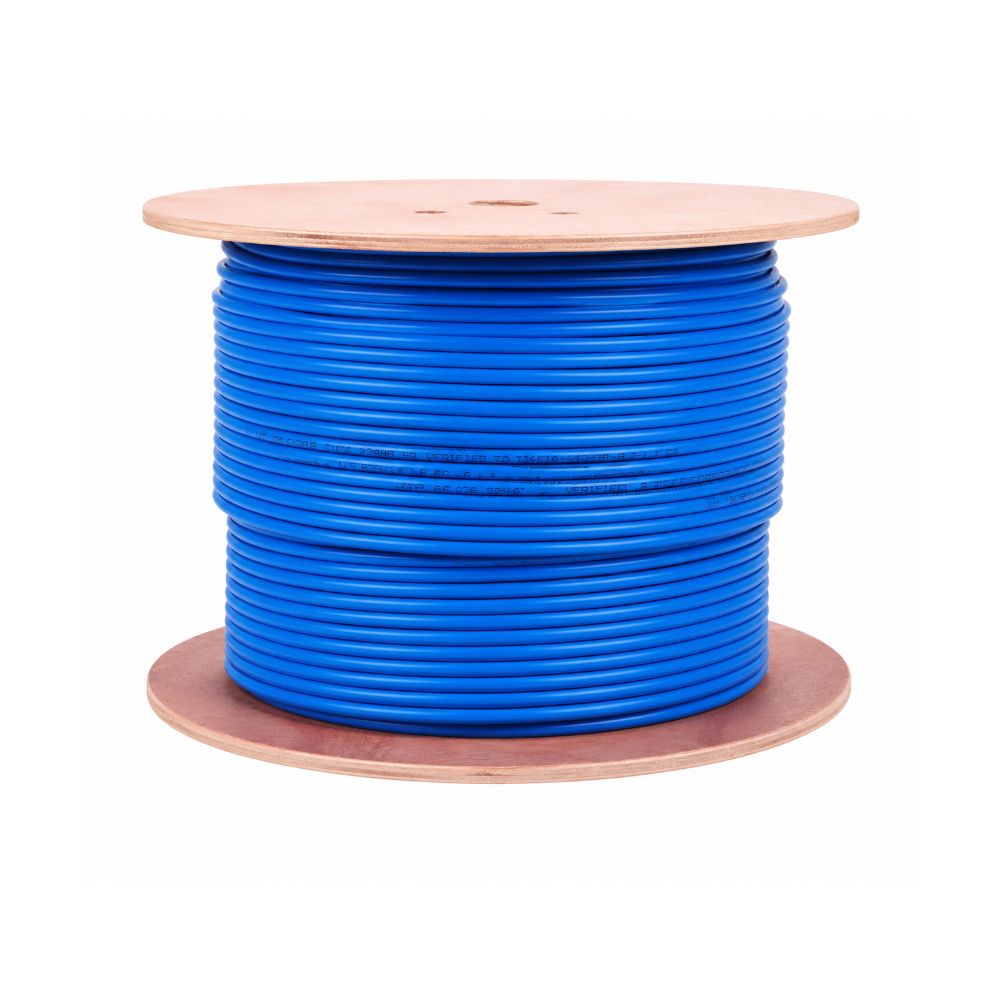
Two boxes of Cat6 can differ in price by a factor of two and look identical on the shelf. The usual reason is the conductor: one is bare copper, the other is copper-clad aluminium. The difference does not show up in a speed test on day one. It shows up eighteen months later on the cameras.
What CCA actually is
Copper-clad aluminium is an aluminium conductor with a thin copper skin — typically only 5 to 10 per cent of the cross-section is copper. It is lighter, cheaper, and looks like copper at the cut end, which is why it is easy to sell.
The TIA-568.2-D standard that defines Category 6 requires bare copper conductors. CCA does not meet it. That is not a matter of opinion or brand preference: cable sold as "Cat6 CCA" is not standard-compliant Cat6, whatever the box says.
The number that matters
Aluminium has materially higher electrical resistance than copper — for CCA, up to around 55 per cent higher than solid copper of the same gauge.
For data alone, that is survivable at short distances. For Power over Ethernet it is the whole problem. Resistance turns into voltage drop along the run and heat inside the bundle. A camera at 80 metres on CCA may receive noticeably less power than the switch is sending, and the shortfall is worst exactly when the camera needs most — at night, with infrared on.
This is the mechanism behind a fault we are called to regularly: cameras that work on the bench, work at 20 metres, and drop intermittently at the far end of the building.
Heat, and why bundles make it worse
Resistance also produces heat. One cable in free air sheds it easily. Forty cables bundled in a ceiling tray do not — they heat each other, resistance rises further with temperature, and the voltage drop worsens. Standards bodies publish derating tables for exactly this, and they assume copper.
On a PoE-heavy install, cable choice is a thermal decision as much as an electrical one.
Termination
Aluminium is more brittle than copper and work-hardens faster. Punched down into a jack it is more likely to crack, and a cracked conductor may still pass a continuity test on the day and fail months later when the building moves or someone dresses the cable behind a rack.
Installers who work with both will tell you the same thing: CCA is unpleasant to terminate and the failures arrive late.
How to tell what you are being quoted
- Read the box, not the shelf label. Compliant cable states "bare copper" or "solid copper". CCA cable is usually marked, in small print
- Weight. A 305 m box of pure copper Cat6 is noticeably heavier than the same box in CCA — aluminium is about a third the density
- The scratch test. Scrape a conductor with a blade; CCA shows silver under the copper skin
- Price. If a Cat6 box is half the price of everything else, that is the reason
- Ask directly. "Is this bare copper or CCA?" is a fair question and a straight supplier will answer it
Where CCA is defensible
Honestly: short patch runs with no PoE, temporary installations, and non-critical links where the cable will be replaced anyway. That is a narrow window, and it does not include anything in a wall.
For a permanent link — the run that goes in the ceiling and stays for fifteen years — the saving is a few thousand rupees across a floor, and the cost of revisiting it is the entire installation.
What we supply
We stock full-size pure copper Cat6 — see Molex Cat6 UTP cable and the wider Cat6 cable range. Conductor gauge is worth checking too: 23 AWG is standard for Cat6, and 24 AWG carries slightly more resistance over the same distance.
If you are comparing quotes and one is materially cheaper, ask both suppliers the conductor question before deciding. It usually explains the gap.