
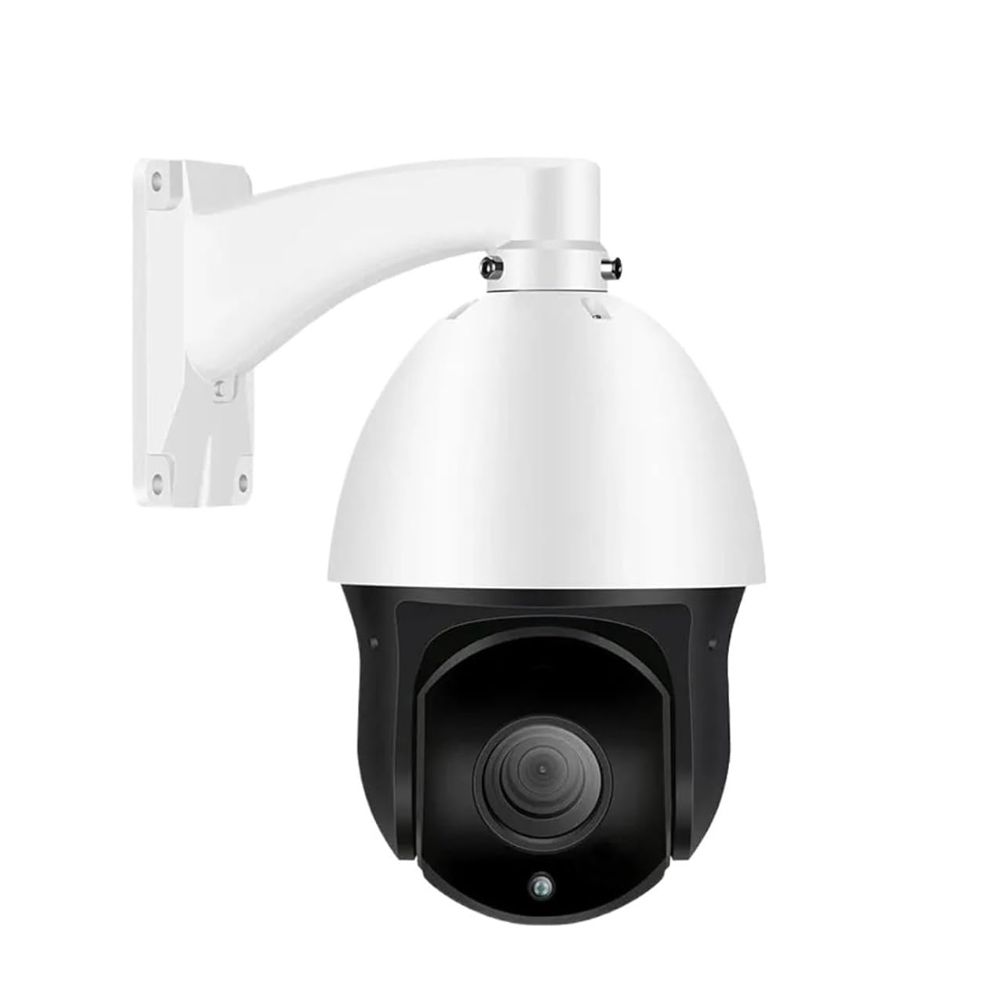
For a new installation this is close to settled — IP wins on almost every axis. But analog is not dead, and there is one specific situation where it remains the right answer. Knowing which situation you are in takes about two minutes.
The one question that usually decides it
Is coaxial cable already in the walls?
If yes, and replacing it would mean opening walls and ceilings, analog deserves a serious look — you can upgrade cameras and recorder on the cabling you have. If you are cabling from scratch, IP is cheaper and more flexible once power is accounted for.
Where IP wins
- One cable per camera. Data and power share the same Cat6 run via PoE. Analog needs coax for video and a separate power feed to each camera.
- Remote viewing is built in — the cameras are already on the network.
- Resolution headroom. 4MP and above is ordinary on IP.
- Shared infrastructure. The same switches and cabling serve cameras, phones and access points.
- Simpler expansion. A new camera needs a network port, not a new cable type.
That first point does more work than people expect. Powering an analog camera means getting mains to every position; a PoE camera takes power from the switch on the cable that already carries its video. See our PoE switch range.
Where analog still makes sense
- Coax already installed and difficult to replace
- A small system with no remote-viewing requirement
- Long single runs where coax reaches further than 90 metres of copper Ethernet
Note that last point has an IP answer too: a fiber run with a media converter, or a switch positioned closer to the cameras. See our fiber optic range.
What each needs at the ends
IP needs a PoE switch with enough total power budget, Cat6 runs inside 90 metres, jacks and patch panels, an NVR, and a rack. The switch total budget matters as much as its per-port rating — see the PoE calculation.
Analog needs coax to each camera, separate power at each position, a DVR with matching channel count, and a rack. Fewer network components, more electrical work.
The hybrid case
Where coax exists but only reaches part of the site, you can keep analog on the existing runs and add IP cameras on new positions, with a recorder that accepts both. It is less tidy than one technology throughout, and worth it when the alternative is re-cabling a working building.
Cost, honestly
Camera prices have converged — our 4MP IP cameras start around Rs 3,400. The difference sits in the infrastructure. IP costs more in switches and structured cabling; analog costs more in electrical work and gives you less to build on afterwards.
Over the life of a system, IP usually costs less, because the cabling is reusable for anything else the building needs. Our Cat6 range and racks cover the passive side.
What we would ask you
- Is there existing coax, and does it reach the positions you want?
- Do you need to view footage remotely?
- What is the longest run from the rack to a camera?
- Are you adding to a network that already exists?
Those four answers settle it in most cases. Send them along with the positions you want covered and we will specify and quote the whole system.
Star Networking Services has supplied networking and security products in Chennai since 1998, across more than 300 projects.
Browse CCTV cameras, read the installation guide, or request a quote.