
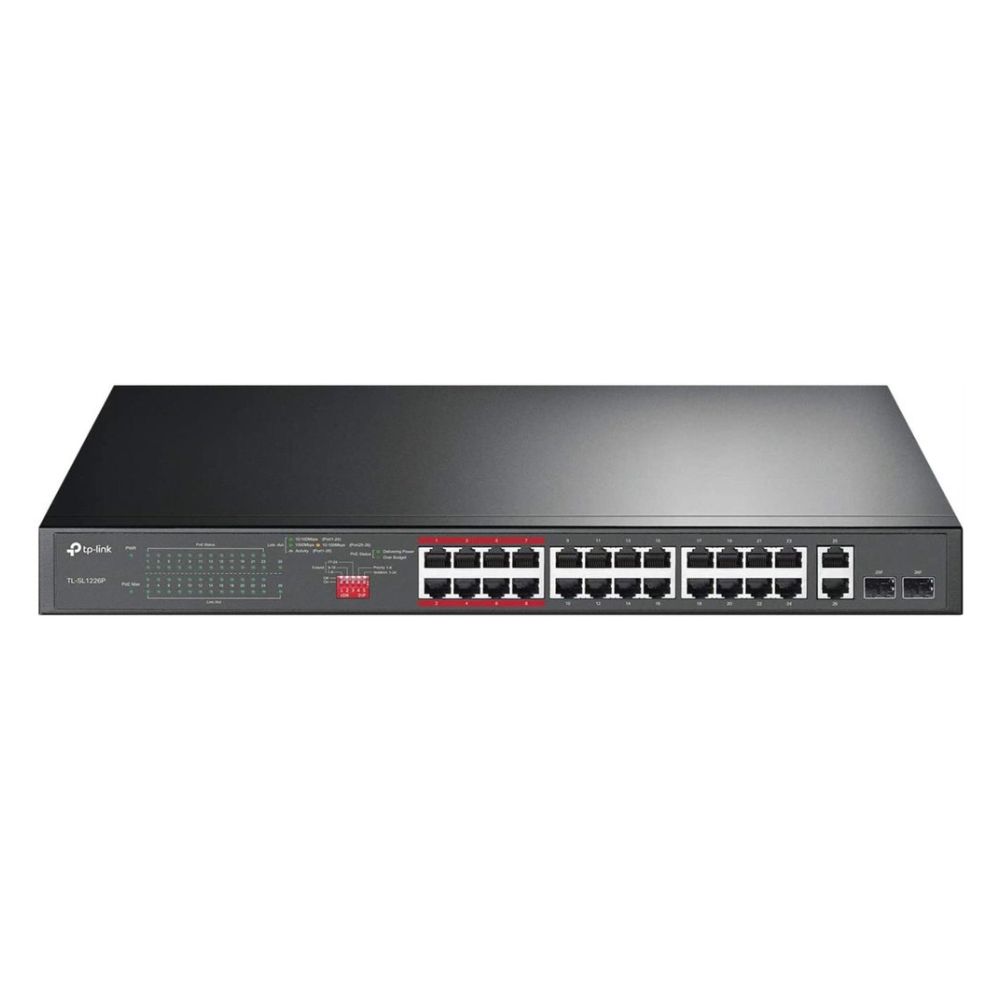
Power over Ethernet comes in tiers, and the difference between them is the reason a perfectly good switch sometimes cannot run a perfectly good camera. The tiers are simple; the trap is that the numbers quoted at the switch are not the numbers available at the device.
The three standards
| Standard | Name | At the port | At the device |
|---|---|---|---|
| 802.3af | PoE | 15.4 W | ~12.95 W |
| 802.3at | PoE+ | 30 W | ~25.5 W |
| 802.3bt | PoE++ | 60–100 W | ~51–71 W |
The gap between the two columns is resistance in the cable. It is not a rounding error — it is roughly 15%, and it is why a device rated at 25 W will not run reliably on a standard PoE port even though 15.4 sounds close enough on paper.
What needs what
Standard PoE is enough for
- Fixed dome and bullet cameras, including 4MP models with infrared
- Most indoor wireless access points
- IP desk phones
- Access control readers
PoE+ is needed for
- PTZ cameras — the motors that pan, tilt and zoom draw far more than a fixed camera, and many models add a heater for outdoor use
- Outdoor cameras with heaters or wipers
- Higher-power Wi-Fi 6 and Wi-Fi 6E access points
- Some video bars and conference devices
PoE++ is needed for
- PTZ cameras with heaters and washers on exposed sites
- Thin clients and small displays powered over Ethernet
PoE++ is rare on the sites we quote in Chennai. If a supplier is steering you to it without naming the device that needs it, ask which one.
The PTZ mistake
This is the specific error worth naming. A site specifies twelve fixed cameras and one PTZ over the yard, then buys a standard PoE switch sized for thirteen fixed cameras. The PTZ either refuses to power up, or powers up and browns out the moment it moves.
The fix is not a bigger budget on the same standard — a 802.3af port cannot deliver 30 W however much total budget the switch has. You need PoE+ ports, or a separate injector for the PTZ.
Check both numbers, always
Two figures decide whether a switch will run your devices:
- Per-port standard — af or at, and on which ports. Some switches offer PoE+ on only the first few ports
- Total budget — what every port can draw at once, which is almost always less than ports × per-port rating
A 24-port switch with a 250 W budget cannot run 24 devices at 30 W each. It can run about eight, or twenty-four at standard PoE. Both numbers matter and only one is usually on the price list.
Distance still applies
PoE does not change the Ethernet limit: 90 metres of permanent cable, 100 metres of channel. Some switches offer an extend mode that reaches 250 m at 10 Mbps, which is genuinely useful for a distant gate camera and useless for anything needing bandwidth.
Cable quality matters more on PoE than on data alone. Copper-clad aluminium has materially higher resistance than pure copper, which turns into voltage drop over a long run — see Cat6 UTP cable and our Cat6 range.
Our PoE and PoE+ switches list the standard and the total budget against each model.