
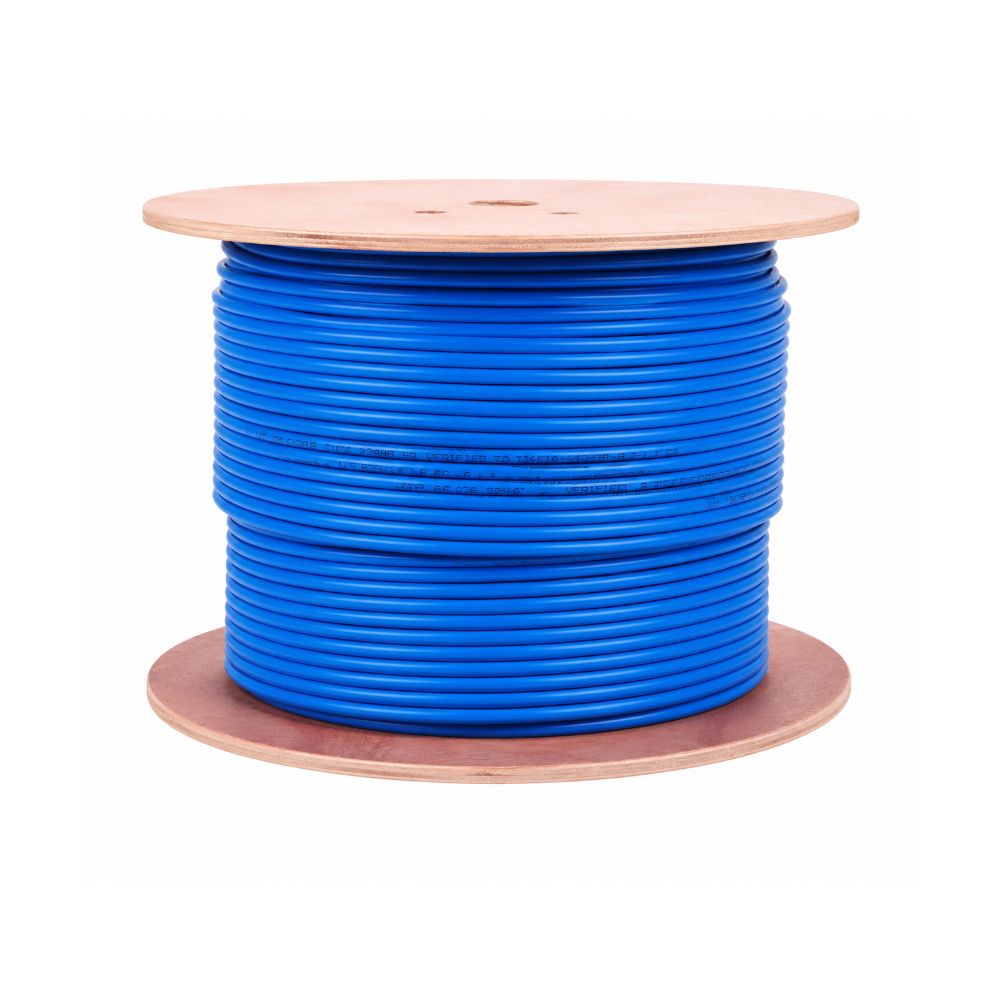
Fiber is not better than copper. It is different, and it costs more to terminate. For the great majority of runs in an office, Cat6 is the correct answer and fiber would be an expensive way to achieve the same result. There are three situations where that flips.
1. Distance — the one that decides most jobs
An Ethernet permanent link is limited to 90 metres of fixed cable, 100 metres of channel including patch cords. That is not a guideline; beyond it the link either fails certification or works unreliably in ways that are painful to diagnose.
When a run exceeds it you have three options: put a switch closer to the devices, run fiber, or accept a link that will misbehave. On a factory floor, across a campus, or between blocks, fiber is usually the cleanest of the three.
2. Electrical interference
Copper carries signal as voltage, so it picks up interference from motors, welders, fluorescent ballasts, lift machinery and heavy power cable run alongside it. Twisting and shielding reduce it; they do not eliminate it.
Fiber carries light. It is immune. In a plant room, along a route that has to share a tray with power, or anywhere a link is inexplicably flaky, that immunity is the whole reason to use it.
3. Between buildings
This is the one people underestimate, and it is a safety point rather than a performance one. Two buildings can sit at different ground potentials. Copper between them creates a path for that difference, and a lightning strike anywhere near either building can travel it. Equipment at both ends dies.
Fiber does not conduct. Any run leaving a building should be fiber, even a short one — and a run of 40 metres between two blocks is exactly the case where somebody is tempted by copper.
Where copper stays right
- Desk runs inside 90 metres — nearly all of them
- Anything needing PoE, which fiber cannot carry
- Camera and access point runs, for the same reason
- Any link where the extra termination cost is not repaid by distance or immunity
That PoE point is worth stating plainly: cameras and access points take power over the cable, so a fiber run to a camera also needs a separate power supply or a media converter with local power. That is usually enough to keep those runs on copper and move the switch closer instead.
The honest cost picture
Fiber cable is not dramatically more expensive than Cat6. What costs is everything else — pigtails, splicing, LIU enclosures, adapters, patch cords and transceivers at both ends, plus the skill to splice and the tools to test.
On a single short link, that overhead is hard to justify. On a backbone carrying every user on a floor, it is spread across all of them and stops being the deciding factor.
The usual answer
Most sites we supply end up with fiber on the backbone between blocks or floors, and copper everywhere inside them. That combination puts the distance and isolation where they are needed and keeps PoE where it has to be.
See Cat6 cable for the copper side, fiber and OFC for the backbone, and switches for the SFP uplinks that join them.